
Promoting Public Awareness and Understanding from a Perspective Close to That of Researchers
Solar Science Observatory, Senior Specialist
Natsuki Yonetani
“When I Become an Astronaut, I’ll Communicate with My Teacher”
I’ve always loved stargazing. It was a summer tradition for me to visit my grandparents in Hyogo and gaze at the star-filled sky. Around the time I was in elementary and middle school, a program began where astronauts would connect to schools from the International Space Station to conduct online experiments and other activities. I told one of my middle school science teachers, “When I become an astronaut, I’ll communicate with you.” That teacher was so engaging that I decided, after astronaut, a teacher was my next choice for what I wanted to become. So I enrolled at Tokyo Gakugei University to conduct astronomy research. However, during my teaching practicum, I realized just how many tasks a teacher has to do, many of them not actually classes. I began to think that I wouldn’t be able to do the kind of engaging lessons I’d dreamed up and would likely burn out. That’s when I decided to pursue a museum curator’s license while working toward my teaching certification. My first job was at Kawasaki Municipal Science Museum, and after that, I moved to Minato Science Museum. While there, I realized that even though I wasn’t a researcher myself, I wanted to be someone who introduces research to the public; I wanted to be a little closer to a researcher than my current position. Just then, I learned that the National Astronomical Observatory of Japan was accepting applications for a public relations position focused on solar observations, a role that involved roughly equal parts research and public relations, as well as outreach activities.
An Uninterrupted Record of the Sun Since 1938
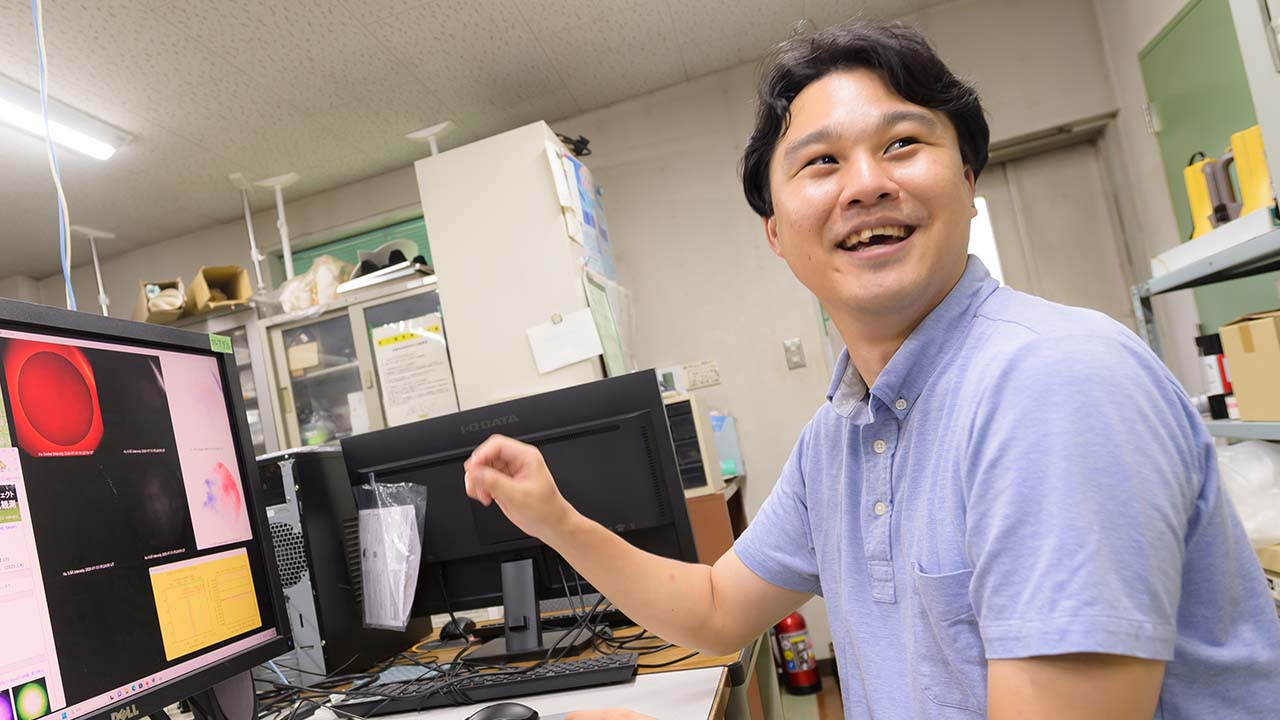
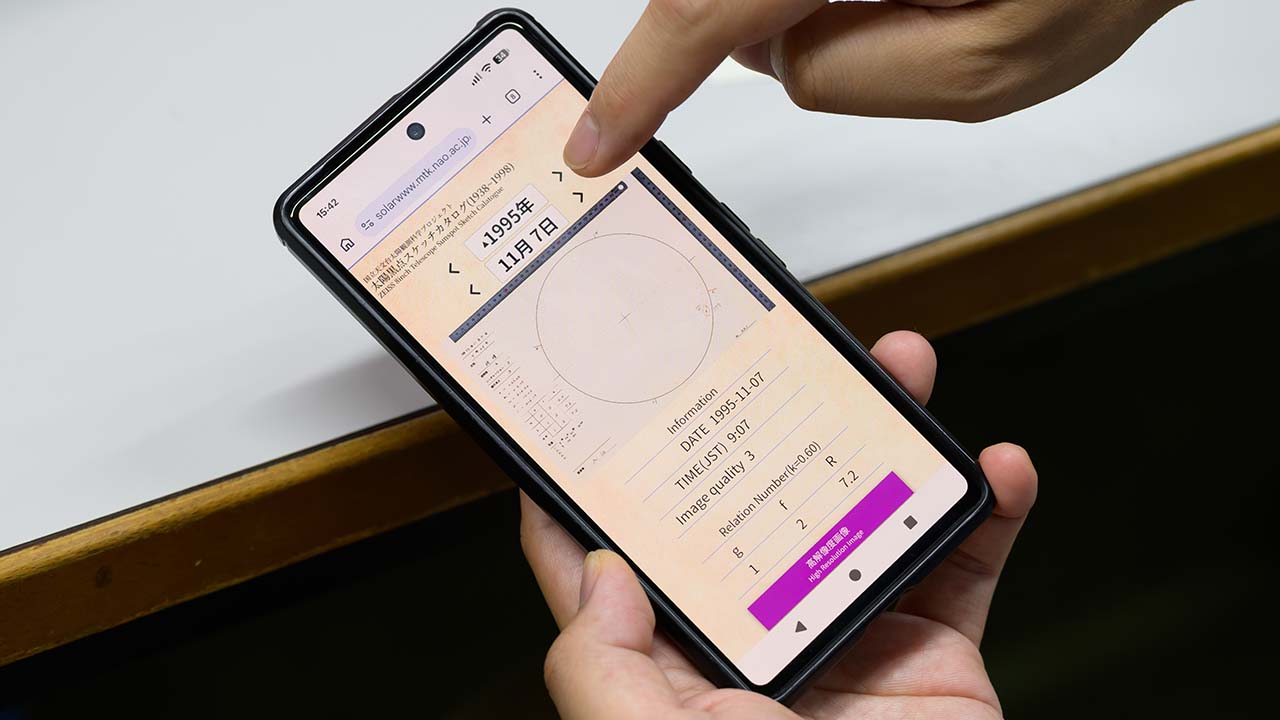
Every clear day, we observe the Sun using a dedicated telescope. Several people takes shifts to collect observation data without interruption; not just on weekends, but also during Obon [Japanese multiday holiday for honoring deceased accessors every August] and the year-end/new-year’s holidays. The oldest records preserved at the National Astronomical Observatory of Japan consist of hand-drawn sketches and notes made by astronomers in 1888. Deciphering and organizing these old observation records is part of my job, though deciphering those elegantly written handwritten notes is quite a challenge (laughs). Starting from 1938, sketch observations of sunspots were conducted at the 20-cm Telescope Dome at the National Astronomical Observatory of Japan, and these sketches continued until 1998. We had previously converted these sketches into data and preserved them for researchers, but now, we’ve reformatted them so that members of the general public can view them on their smartphones. We’re still in the process of making final checks, but we plan to open them to the public in about a month (Note). With the Sun, you can compare what the sunspots looked like on your parents’ birthdays, for example.
(Note) The archive was opened in August 2026.
Detailed Work and Crafting are Both my Job and my Hobby
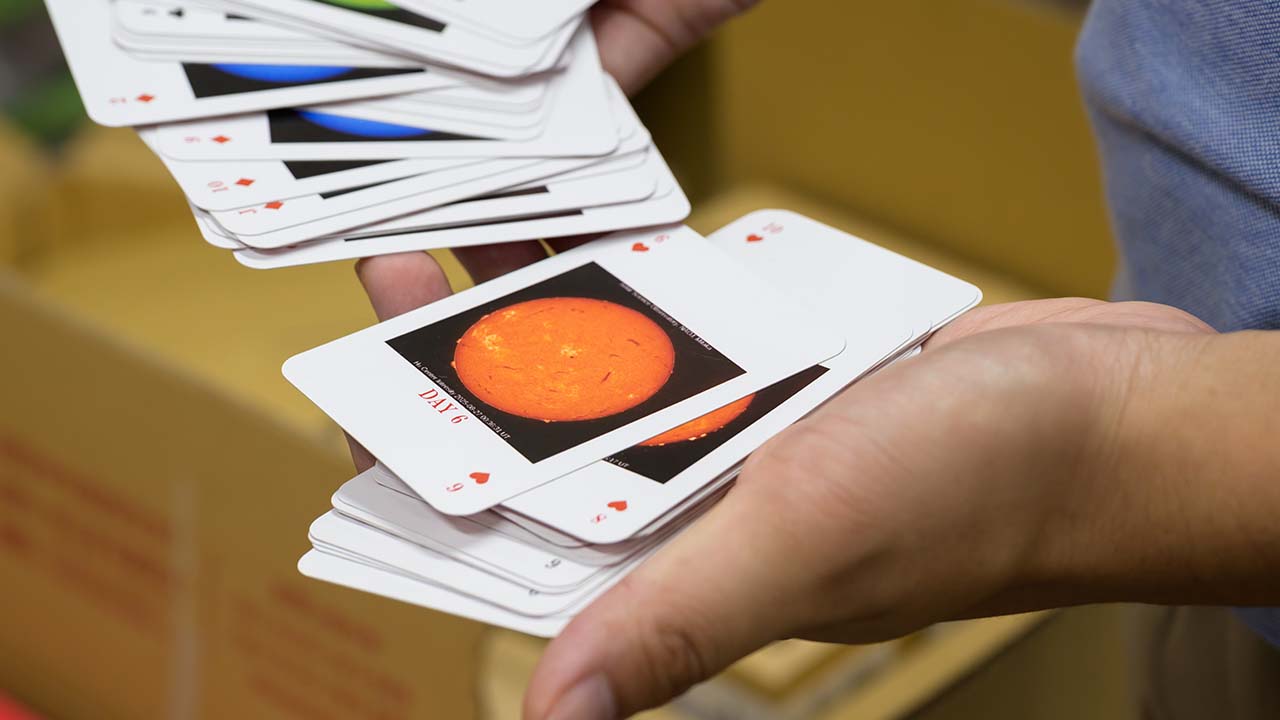
I make the exhibits, models, and various merchandise used during the National Astronomical Observatory of Japan’s Open House Day. I’ve also created PowerPoint presentations for lectures and even made picture-story shows to take to kindergartens. One of the reasons I originally wanted to become a teacher or a museum curator was because I enjoy creating original teaching materials. At home, I often do detailed work and crafts: all different types of needlework, as well as paper craft, origami, and carving stamps out of erasers. I also enjoy making food; this year, I made lots of blueberry jam. Thanks to my parents’ influence, since I was little, I’ve been good at putting things together or taking them apart. I also like going for walks outdooors. I like to wander through unfamiliar places without a map, turning down side streets or popping into shops that look interesting. I have a hand towel with an old map printed on it. It’s fun to walk while looking at it. In the late Edo era, there was a samurai named Murao Karyo who loved taking walks; he wrote down what he saw during his strolls. Lately, I’ve been enjoying retracing his steps, thinking, “Ah, this is the spot. So this is where he turned.”
SOLAR-C and Hopes for the Next Generation of Researchers
The solar data we continue to observe every day is used in space weather forecasts issued by NICT (National Institute of Information and Communications Technology), etc. Powerful electromagnetic waves emitted by solar flares, such as X-rays and ultraviolet rays, can adversely affect electronic devices and communication systems—and once that happens, it’s too late. To make accurate predictions, we first need to properly understand the science behind the physical phenomena and why the Sun causes these explosions.
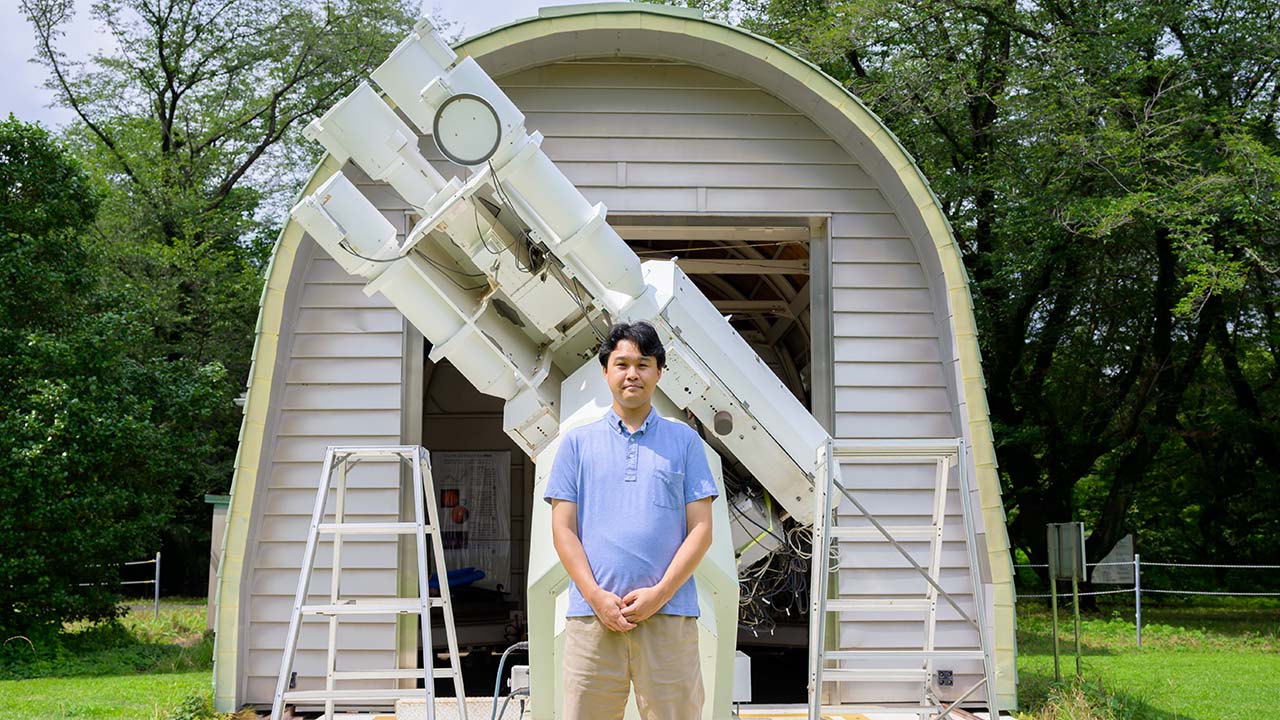
Currently development is underway on the new solar observation satellite SOLAR-C, aiming to launch in Fiscal Year 2028 or later. In the outreach work, we are still at the stage of creating brochures and models, as well as providing data and images to various organizations. We are also actively reaching out to high school astronomy clubs and science teachers, inviting them to visit the National Astronomical Observatory of Japan and showing them solar research data. This isn’t just about increasing the number of astronomy enthusiasts; it’s also about ensuring that when SOLAR-C begins operations and its observational data are made publicly available, those students, who will by then be college or graduate students, will be able to use brand-new data that no one has ever seen before. “If you stay passionate about the stars, you’ll be able to view the latest data from the newest telescopes before anyone else,” I tell them. We’re diligently sowing the seeds for the future to increase the number of researchers.
Interview Date: July 3, 2026 / Published: September 18, 2026
Interview & Article: Masami Usuda / Translation: Ramsey Lundock / Photo: Shogo Nagayama
The contents of this article are as of the interview date.